Weekly field note
What to Know Before Trying Qigong in South Florida
Published July 27, 2026
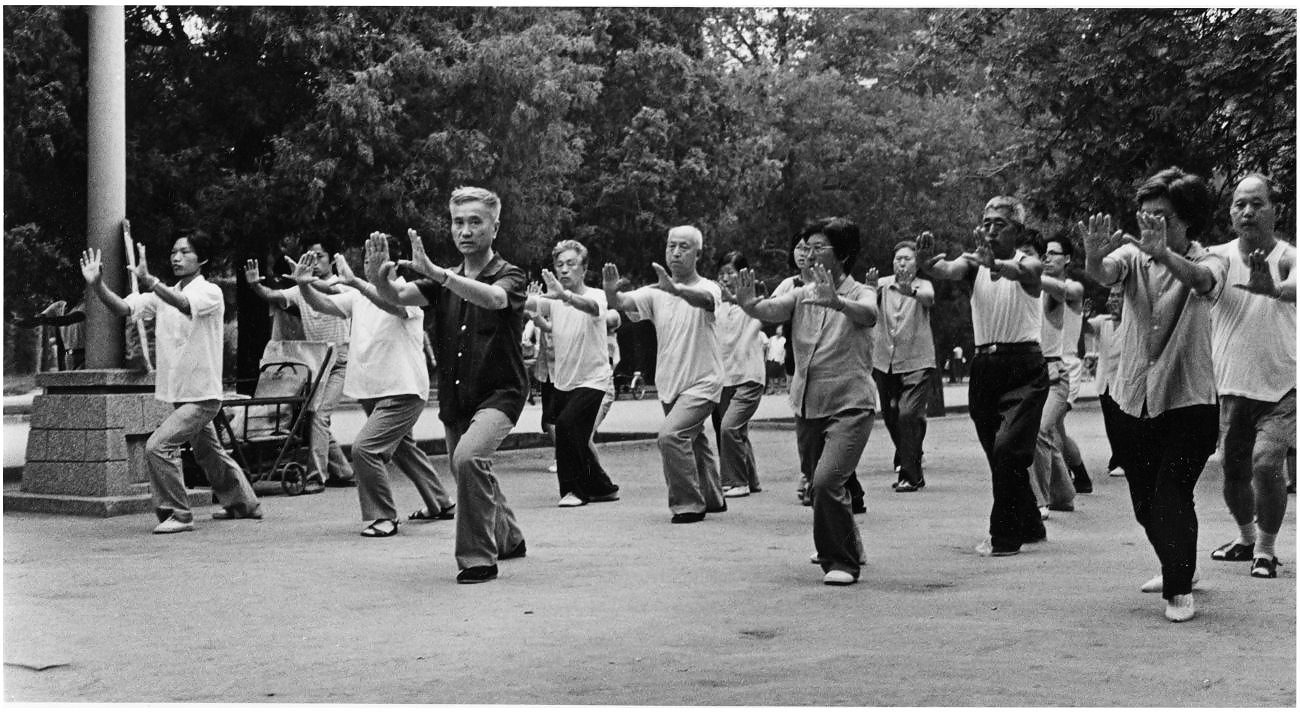
*Image: Tai chi in the morning in Peking by Foto: Lars Mongs, Arxfoto, licensed under CC BY 4.0. Used here as an illustrative mind-body movement image; it does not depict South Florida Qigong or qigong specifically.*

If you are curious about qigong, you may be looking for a low-pressure way to move gently, breathe with more intention, practice paying attention, and explore whether a steady wellness routine fits your life.
That is a reasonable place to start.
Qigong is commonly described as a traditional mind-body practice involving slow movement, posture, breathing, focused attention, and relaxation. Some beginners may find it approachable because it can feel less intense than gym-style exercise, more movement-based than seated meditation, and less performance-oriented than many modern wellness trends.
South Florida Qigong offers a local starting point for people who want to explore the practice in a guided setting. This article is educational marketing content, not medical advice. Qigong should not be used to diagnose, treat, cure, or prevent disease, and it is not a substitute for licensed medical care, physical therapy, mental-health care, medication, rehabilitation, or emergency care. If you have a health condition or are unsure whether a new movement practice is appropriate for you, consult a qualified health care professional before beginning or changing activity.
What qigong is
Qigong has roots in traditional Chinese practice. The word is often explained through “qi,” commonly understood in traditional contexts as vital energy or life force, and “gong,” which can refer to skill developed through practice. In plain language, qigong is usually practiced through movement, breath, posture, attention, and relaxation.
A session may look quiet from the outside. Movements are often slow and deliberate. The pace may give students time to notice how they are standing, shifting weight, breathing, lifting the arms, turning the torso, or releasing unnecessary tension. Some practices are done standing. Some may be adapted or practiced seated, depending on the teacher, class format, and student’s needs.
It helps to keep two kinds of language separate.
Traditional qigong language may describe qi, internal balance, cultivation, or harmony. That language belongs to the tradition and can be meaningful for practitioners.
Scientific and public-health language is different. The National Center for Complementary and Integrative Health frames qigong as a mind-body practice and uses cautious language about possible benefits and evidence limits. From that perspective, qigong is best discussed as a gentle movement and attention practice that some people use for relaxation, body awareness, balance-oriented practice, mobility-oriented movement, or general well-being. Evidence varies by study, population, practice style, and outcome, so responsible discussion should stay qualified.
You do not have to settle every philosophical question before trying a class. A beginner can approach qigong practically: learn the movements, breathe comfortably, pay attention, stay within a safe range, and see whether the practice fits.
Why beginners often find qigong approachable
One reason people become interested in qigong is that many qigong classes are presented as gentle and low-impact. Unlike activities built around speed, load, competition, or intensity, many qigong forms emphasize ease, repetition, coordination, and attention.
That does not mean every class is right for every person. “Gentle” is not the same as “risk-free.” Standing for a long time, shifting weight, turning the head, bending the knees, or practicing breath control can still be uncomfortable or inappropriate for some bodies. But compared with many exercise formats, qigong may feel less intimidating to people who are older, deconditioned, stiff, new to movement, or simply not interested in a gym-style environment, if the class is appropriate for their individual circumstances.
Beginners also do not need to be flexible, athletic, or experienced in meditation to attend many introductory classes. In many cases, the point is not to perform a shape perfectly. The point is to practice awareness: noticing how you move, how you hold tension, how your breathing changes, and how to return to a steadier rhythm without forcing a medical or therapeutic outcome.
A guided class can help provide structure. Instead of trying to learn from scattered videos or vague descriptions, students can follow a sequence, ask questions, and learn pacing. For many beginners, that structure may make it easier to explore qigong as a repeatable practice.
What the evidence can and cannot say
Qigong sits in a space where both enthusiasm and skepticism are understandable.
Some people speak warmly about their experience with the practice. They may describe feeling calmer, more aware of their body, more comfortable with gentle movement, or more consistent with a wellness routine. Those personal experiences can be meaningful, but they should not be treated as proof that qigong diagnoses, treats, cures, or prevents a medical condition.
At the same time, qigong is sometimes marketed with exaggerated claims. That is where caution is necessary. A responsible article should not claim that qigong treats medical conditions, prevents disease, cures illness, reverses aging, detoxes the body, replaces therapy, replaces medication, replaces licensed care, or guarantees any health outcome.
Some research has studied qigong and related practices in areas such as stress, balance, mobility, relaxation, and general well-being. A broad open-access review, A Comprehensive Review of Health Benefits of Qigong and Tai Chi, is useful as background for how these practices have been studied, but the age and heterogeneity of the research matter. Studies can differ in quality, size, methods, participant groups, practice styles, and outcomes measured.
Tai chi is sometimes discussed alongside qigong because both can involve slow, coordinated movement, posture, breath, and attention. The NCCIH has a separate overview of tai chi, and evidence reviews, including a Cochrane review on tai chi for preventing falls in older people, have examined tai chi in balance and falls contexts. But tai chi and qigong are not identical. Tai chi evidence should not be treated as automatic proof for every qigong claim.
That distinction matters. It is possible to respect traditional practice, acknowledge areas where research has been explored, and still refuse to overstate what is known. For a beginner, the most trustworthy framing is simple: qigong may be a reasonable wellness practice for some people when approached consistently and safely, but it is not a medical treatment and should not be sold as one.
Qigong as a steady wellness habit
The safest way to understand qigong is as a practice.
A practice is different from a promise. It does not guarantee a dramatic result by a certain date. It gives you something to return to: a way to stand, breathe, move, pay attention, and begin again.
That may sound modest, but modest can be valuable. Some people struggle not because they need a more extreme routine, but because they are looking for something they can realistically repeat. A gentle movement practice may feel easier for some people to sustain than a program that feels punishing, complicated, or built for someone else’s body, as long as the activity is appropriate for their health, ability, and guidance from qualified professionals when needed.
Public-health guidance broadly supports regular physical activity and reducing sedentary time. The CDC’s physical activity guidance for older adults includes attention to aerobic activity, strengthening, balance, and adapting activity to ability, while the World Health Organization emphasizes the broad value of movement and reducing inactivity. That does not mean qigong alone satisfies every activity recommendation for every person. It also does not mean qigong replaces strength training, aerobic activity, balance-specific work, rehabilitation, or clinician-directed exercise when those are needed.
But qigong can be considered as one possible part of a broader wellness routine for some people. It may offer a low-pressure way to explore gentle movement for someone who has been inactive, if that level of activity is appropriate for them. It may give an already active person a slower, more attentive practice. It may invite someone to notice posture, breath, or tension patterns they usually ignore, without implying that those observations diagnose or resolve a health condition.
The value is not in claiming that qigong does everything. The value is in learning what this practice is commonly used for: slowing down, simplifying, repeating, and bringing attention back to the body.
What a first class may feel like
A first qigong class may feel different from what beginners expect.
You may spend more time moving slowly than you are used to. You may repeat a simple motion several times. You may be asked to notice your feet, knees, hips, spine, shoulders, hands, or breath. You may find that moving slowly is challenging, not because it is forceful, but because it asks for attention.
Some beginners describe feeling calm during or after a class. Others feel awkward. Some wonder whether they are “doing it right.” That is normal. A practice based on subtle movement and attention can take time to understand, and individual experiences vary.
It can help to arrive with a learning mindset rather than an outcome checklist. Instead of asking, “Will this fix me?” ask:
- Can I follow the movements comfortably?
- Does the pacing feel appropriate?
- Can I ask questions?
- Are modifications available if I need them?
- Do I feel respected as a beginner?
- Does the practice seem realistic for me to repeat?
Those questions are more useful than chasing a dramatic first impression. Qigong often makes more sense through repetition.
How to approach qigong safely
A responsible first class starts with honest self-assessment.
Move gently. Stay within a comfortable range of motion. Avoid forcing positions, locking joints, holding your breath, or trying to copy a movement in a way that causes pain or dizziness. If something feels wrong, pause.
Ask the teacher about pacing and modifications. If standing is difficult, ask whether there are seated or reduced-intensity options. If balance is a concern, ask how to position yourself safely. If a movement does not feel right, ask whether there is a smaller version.
Be especially cautious if you have severe or unexplained pain, dizziness, fainting episodes, balance impairment, cardiovascular concerns, neurological symptoms, recent injury, recent surgery, pregnancy-related concerns, or any medical condition that may affect your ability to participate safely. In those cases, speak with a qualified health care professional before beginning or changing your activity.
This is not meant to scare people away. It is practical safety advice. A good wellness practice should fit the person in front of it. It should not pressure anyone to ignore pain, override medical guidance, or prove toughness.
Qigong is often presented as gentle, but your body still deserves respect.
Why local guidance can help
Learning qigong locally can be helpful because it gives the practice a real-world container.
A class creates time on the calendar. It gives beginners a place to start, a sequence to follow, and a teacher to learn from. It can also create a quiet kind of accountability: not pressure, but rhythm.
That rhythm matters. Many wellness habits fail because they remain abstract. People intend to stretch, breathe, meditate, or move more, but the intention never becomes a repeatable routine. A local class can make the next step clearer.
South Florida Qigong can serve as that local point of entry for people who want to explore qigong in a guided environment. Before attending, review the current information on the official website and contact the business directly with practical questions about class format, location, schedule, teacher guidance, accessibility, and whether the class is appropriate for your needs.
Because class details can change, rely on the official site for current offerings rather than assumptions.
A grounded way to decide
If you are deciding whether to try qigong, you do not need to believe exaggerated claims. You also do not need to dismiss the practice because some marketing around it can be overstated.
A grounded middle path is available.
You can respect qigong as a traditional practice while being clear that traditional concepts are not the same as scientific proof. You can be interested in possible wellness benefits while understanding that evidence varies. You can try a class for relaxation, gentle movement, attention, posture, breath, or community without expecting it to diagnose, treat, cure, or prevent a medical condition.
That balanced approach is not less meaningful. It is more trustworthy.
The best reason to try qigong is not because someone promises a guaranteed transformation. The best reason is that you are curious about a steady practice that combines movement, breath, attention, and repetition in a gentle way.
For many beginners, that is enough.
Bottom line
Qigong may be reasonable to explore if you are looking for gentle movement, mindful attention, and a low-pressure way to build consistency, provided the activity is appropriate for your individual situation. It is not a cure, not a replacement for licensed care, and not something that should be wrapped in miracle claims.
Approached responsibly, qigong can be explored as a traditional mind-body practice with contemporary wellness interest and appropriate safety boundaries. South Florida Qigong offers a local place to begin that exploration.
Start gently. Ask questions. Keep expectations realistic. Consult a qualified health care professional when your health situation calls for it. If the practice fits, let it become what qigong has always depended on becoming: something developed over time.