Weekly field note
What Is Qigong? A Beginner-Friendly Guide to Gentle Practice in South Florida
Published August 3, 2026
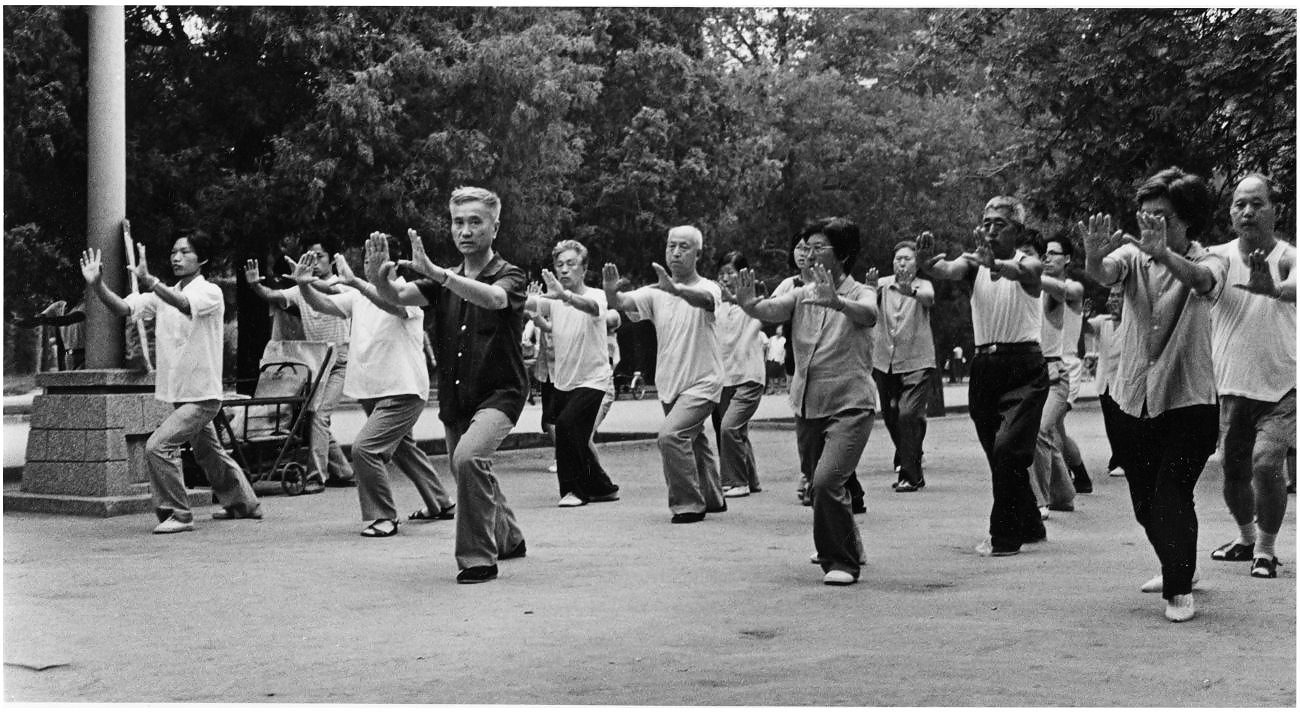
*Image: Editorial image for South Florida Qigong by Foto: Lars Mongs, Arxfoto, licensed under CC BY 4.0.*

If you want to learn about a slower, more attentive way to move, qigong may be worth exploring. It can look like slow exercise, meditation in motion, breathing practice, traditional movement training, or a wellness class. In practice, it can include parts of all of those, depending on the style and teacher.
South Florida Qigong offers a local entry point for people who want to explore qigong in an approachable way. The strongest reason to begin is not because qigong promises a dramatic result. A responsible qigong practice is better understood as a way to learn gentle movement, breath-led attention, posture, and body awareness over time.
This article is educational and is not medical advice. Qigong should not be used to diagnose, treat, cure, or prevent any disease or condition, and it should not be used as a substitute for licensed medical, mental-health, rehabilitation, or emergency care. If you have health concerns, injuries, pregnancy-related concerns, dizziness, balance difficulty, severe pain, or mental-health concerns, consult a qualified health professional before starting or modifying any movement practice.
What qigong is, in plain language
Qigong is commonly described as a traditional mind-body practice that combines gentle movement, posture, breathing, and focused attention. The National Center for Complementary and Integrative Health describes qigong as a practice involving movement, meditation, and breathing, while also emphasizing that evidence for health-related claims needs careful interpretation.
Some forms are done standing. Others may include seated practice or modified movements. Some sequences are simple and repetitive. Others are more structured and require more instruction. For a beginner, the useful frame is simple: qigong is a practice you learn gradually, not a performance you have to perfect immediately.
The word “qigong” is often translated in relation to “qi,” a traditional term sometimes described as vital energy or life force, and “gong,” which can refer to skill developed through practice. In traditional qigong language, practice is often associated with cultivating or working with qi. In educational health copy, that should be presented as traditional terminology, not as a proven biomedical mechanism.
That distinction matters. A person can respect qigong’s traditional roots without turning traditional concepts into medical claims. You do not need exaggerated promises to appreciate slow, attentive movement. You can approach qigong as something you do, observe, adjust, and return to.
Is qigong exercise, meditation, martial arts, or wellness practice?
The honest answer is: it depends on the context.
Some qigong forms are practiced as gentle movement. Some are connected to martial traditions. Some are taught with a meditative emphasis. Some are offered in modern wellness settings. The same word can point to a wide family of practices rather than one single routine.
For a beginner in South Florida, the most practical way to think about qigong is this: it is a structured movement and attention practice that may be adaptable to different levels of comfort and ability, depending on the person, setting, and instruction. Some people may experience it as more spacious than a gym class or more embodied than seated meditation. It may include standing, shifting weight, turning, raising and lowering the arms, coordinating breath with movement, or pausing to notice posture and balance.
That does not mean it is effortless or appropriate for everyone in every situation. “Gentle” is not the same as “risk-free.” Even slow movement can be too much if it is done with strain, poor pacing, unstable footing, held breath, or unrealistic expectations. A responsible class or practice environment should make room for modification and should never pressure people to push through pain, dizziness, distress, or instability.
Why beginners are drawn to qigong
Many qigong practices are gentle and may be modifiable, which can make them appealing to people who are interested in a slower movement practice. That appeal may be relevant for adults who feel turned off by performance-driven fitness culture.
Some people do not want louder, faster, harder movement. They may be looking for a practice environment that leaves room for attention, unhurried breathing, noncompetitive movement, and the experience of being new.
Qigong may fit that kind of interest because the practice often emphasizes comfortable pacing, breath-led movement, upright posture, softness rather than force, repetition, awareness of weight and alignment, and a less performance-focused relationship with the body.
Some people explore qigong for relaxation, body awareness, and general well-being. Those are reasonable wellness themes when they are not turned into guaranteed outcomes. It is one thing to say a practice invites calm attention. It is another to promise a specific physical, emotional, or clinical result. Responsible educational marketing should avoid that leap.
For beginners, the learning opportunity is simpler: qigong gives you something concrete to practice. You can learn to notice where your feet are. You can pay attention to how your shoulders move. You can observe whether you are holding your breath. You can practice shifting weight with more attention. You can become more familiar with how your body responds to slower movement.
That kind of learning does not require hype.
What research can and cannot say
Qigong has been studied in several health and wellness contexts, including research involving different populations and outcomes. Review literature has explored qigong and tai chi across a range of topics, including this older PubMed Central review of qigong and tai chi research. However, evidence varies by outcome, study design, population, and overall research quality.
That is why public-facing language should stay careful: research has explored qigong; some studies report possible findings in certain contexts; evidence is mixed; more high-quality research may be needed; and findings should not be converted into broad medical promises.
This restraint is not a weakness. Overclaiming makes wellness content less trustworthy. A local qigong offering does not need to promise clinical results to be worthwhile. It can be described as education, practice, community, and a low-pressure way to explore gentle movement.
This is especially important because many people searching for qigong are also searching around health concerns. They may be dealing with discomfort, stress, aging, illness, recovery, anxiety, balance concerns, or fatigue. Those are real human reasons to look for something gentler. But those same reasons make clear boundaries essential.
Qigong should not be presented as licensed care or as a substitute for medical care, therapy, medication, physical therapy, rehabilitation, exercise guidance, or emergency care. If you are under the care of a clinician, it is wise to ask whether a new movement practice is appropriate for you and whether there are movements or breathing practices you should avoid or modify.
Traditional practice without exaggerated claims
Qigong comes from traditional practice contexts, and it is fair to acknowledge that. A thoughtful introduction does not need to strip away every traditional term. It also does not need to turn those terms into scientific proof.
In traditional qigong language, a teacher or practitioner may speak about qi, flow, cultivation, internal awareness, or harmony. Those words belong to a traditional framework. They may be meaningful to practitioners as a way of describing experience, attention, and practice.
In scientific or medical language, however, claims require different standards. Saying that qigong includes traditional ideas about qi is not the same as saying qi has been proven to change organ function, resolve disease, or produce specific clinical outcomes. A responsible article keeps those categories separate.
That separation is good for everyone. It respects tradition without misusing science. It helps skeptical beginners feel welcome. It protects vulnerable readers from inflated promises. It also allows qigong to be presented through practice, careful instruction, and realistic expectations rather than through marketing claims.
You can try qigong without needing to accept every traditional explanation literally. You can also appreciate traditional language without turning it into a medical claim. The middle path is simple: learn the movements, listen carefully, ask questions, and let the practice be practice.
How to approach qigong safely
Because qigong often looks slow and gentle, people may assume there is no need to think about safety. That is too casual. A gentle practice still involves the body, breath, attention, balance, and sometimes sustained standing or repeated motion.
Start slowly. Give yourself time to learn the movements before trying to make them deeper, larger, or more intense.
Do not force range of motion. If a movement asks you to turn, bend, reach, squat, or shift weight, stay within a comfortable range. Smaller movement is still practice.
Do not force the breath. Breath-led practice should not become breath-straining practice. If breathing instructions make you uncomfortable, return to natural breathing.
Modify when needed. A responsible beginner practice should allow adjustments for comfort, stability, and ability. Seated or smaller versions may be appropriate in some contexts.
Pause if something feels wrong. Pain, dizziness, unusual shortness of breath, distress, instability, or a feeling that you may fall are signs to stop and reassess. If symptoms are severe, unusual, persistent, or concerning, seek guidance from a qualified health care professional or appropriate emergency care.
Official public-health sources also support the broader idea that movement should fit the person. The CDC’s guidance for older adults and physical activity emphasizes activity appropriate to ability, while the World Health Organization’s physical activity fact sheet discusses physical activity in general public-health terms. These sources do not endorse qigong specifically, but they do support a careful, ability-aware approach to movement.
Safety is also part of mental-health boundaries. NCCIH’s page on anxiety and complementary health approaches is a useful reminder that complementary practices should not be marketed as substitutes for qualified mental-health care. Practice expectations and appropriateness matter, especially for vulnerable readers.
What to look for in a beginner-friendly qigong class
A beginner-friendly qigong class or local practice should make it easier to learn, not harder to prove yourself.
Look for clear instruction. You should be able to understand the basic shape of a movement, how to begin, and how to adjust if something feels uncomfortable.
Look for permission to modify. No one should make you feel that smaller movement, slower pacing, or resting is a failure.
Look for comfortable pacing. Beginners need repetition and time. A class that rushes through too much may be harder to follow than one that teaches a few things well.
Look for grounded language. Traditional language may be part of qigong, but be cautious around any environment that promises unsupported promises of results, pressures you to ignore licensed medical guidance, or treats discomfort as proof that the practice is “working.”
Look for a practice culture that values consistency. Qigong is usually better understood as something you develop gradually, not something you master in one session.
Look for humility around health claims. A responsible teacher or organization can discuss qigong as a movement and awareness practice without promising to change symptoms or replace licensed care.
These qualities matter more than dramatic claims. For a beginner, the right environment is one where you can ask basic questions, move at a reasonable pace, and feel no pressure to perform.
Where South Florida Qigong fits
For people in the region, South Florida Qigong can be understood as a local place to learn more about qigong practice. If you are curious, the official website is the right place to review current offerings, details, and practical information about how to get started.
The most trustworthy way to approach South Florida Qigong is with curiosity rather than urgency. You do not need to arrive flexible, fit, experienced, or already convinced. You can simply want a clearer introduction to gentle movement, breathing, posture, and attention.
A local qigong practice may be appealing because learning from a class or community can give structure to something that is difficult to understand from short videos or vague descriptions. Beginners may appreciate pacing, repetition, and reminders not to force the body. They may also appreciate being around others who are learning rather than trying to turn practice into performance.
The key is to keep expectations realistic. Qigong is not magic. It is not medical care. It is not a cure-all. It is not guaranteed to produce any particular outcome. But it may be a meaningful practice for people who want to explore gentle movement in a more attentive way.
Begin with curiosity, not pressure
Qigong can be introduced simply: gentle movement, posture, breathing, and focused attention, shaped by a traditional practice framework and adapted in many modern settings. Some people explore it for relaxation, body awareness, consistency, and general well-being. Research has explored qigong in several contexts, but evidence varies, and responsible communication should not turn that research into medical promises.
If you are new, begin slowly. Choose comfort over intensity. Modify when needed. Avoid forcing movement, breath, posture, or sensation. If you have health concerns, injuries, pregnancy-related concerns, dizziness, balance difficulty, severe pain, or mental-health concerns, speak with a qualified health professional before starting.
South Florida Qigong may be a useful next step if you want local guidance and a more structured way to learn. Visit the official site, review the current information, and consider whether a beginner-friendly qigong practice fits what you are looking for.
The best first step is not dramatic. It is simply to learn what the practice is, understand what it is not, and begin with enough patience to listen.