Weekly field note
A Practical Beginner’s Guide to Qigong in South Florida
Published July 24, 2026
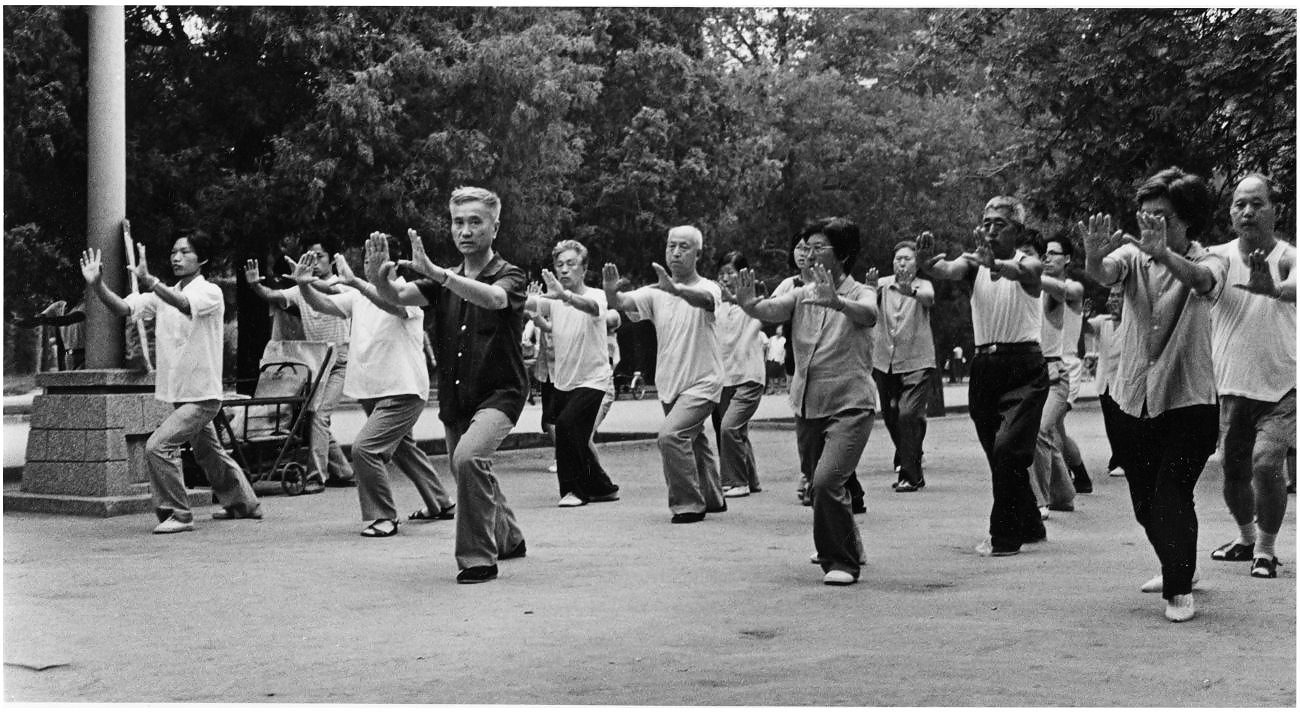
*Image: Illustrative tai chi/qigong-related practice image, not a photo of South Florida Qigong or its classes by Foto: Lars Mongs, Arxfoto, licensed under CC BY 4.0.*

If you have heard the word “qigong” and still are not sure what it means, you are not alone. Some people describe it as gentle exercise. Others place it near meditation, tai chi, breathwork, martial arts, or traditional Chinese wellness practice. Online, you may also find claims that make qigong sound mystical, medical, or too vague to evaluate.
A clearer starting point is this: qigong is commonly described as a mind-body practice that combines gentle movement, posture, breathing, and focused attention. The National Center for Complementary and Integrative Health describes tai chi and qi gong in this general mind-body category, while also keeping evidence and safety claims cautious.
That caution matters. A beginner class should not promise diagnosis, treatment, cure, prevention, or guaranteed outcomes. A better question than “Will qigong fix something?” is “Does this look like a thoughtful, appropriate way for me to learn gentle mindful movement?”
South Florida Qigong can be approached in that spirit: as a local place to explore qigong through instruction, practice, and realistic expectations.
What qigong is, in plain language
Qigong is often grouped with tai chi because both are commonly discussed as traditional Chinese practices involving movement, posture, breathing, and attention. Tai chi is usually known for flowing, martial-art-derived sequences. Qigong can include a wider range of practices, from simple standing postures and repeated slow movements to more structured routines.
The word “qigong” is often translated in ways that reference “qi,” a traditional concept sometimes described as vital energy or life force, and “gong,” meaning skill or cultivation developed through practice. That traditional language is part of qigong’s history and how many practitioners understand the art.
At the same time, traditional concepts should not be confused with modern clinical evidence. Saying that qigong includes ideas about qi, breath, posture, and internal cultivation is different from saying that qi is an established biomedical mechanism. This article presents qigong as an educational mind-body practice, not as diagnosis, treatment, cure, prevention, or a replacement for licensed medical care.
For a beginner, the first step does not require solving every philosophical question. You can begin with the observable parts: slow movement, standing or seated posture, coordinated breathing, attention, and repetition.
What a beginner session may feel like
A beginner-oriented qigong session is often slow, low-impact, and adaptable. That does not mean every practice is right for every person. It does mean many newcomers may experience the format as less intense than high-intensity fitness classes.
You may be invited to stand comfortably, soften the knees, relax the shoulders, and move through simple patterns. Some movements may involve raising and lowering the arms, shifting weight, turning gently, or coordinating the hands with the breath. Other moments may ask you to pause, notice posture, or bring attention to a particular movement quality.
Good beginner instruction matters because many learners are asking practical questions. Am I doing this correctly? Is online learning enough? How much should I practice? What if I feel awkward? What if the language feels unfamiliar? What if I have physical limitations?
Community discussions, including places like r/qigong and structured Q&A spaces such as the Martial Arts Stack Exchange qigong tag, show that beginners often care about teacher guidance, clear instruction, and realistic expectations. Those sources are useful for understanding learner concerns, not for proving health benefits.
A teacher-led setting can make the learning process clearer. It may help you understand pacing, posture, and options for adapting a movement in an educational setting. It can also help you avoid approaching unfamiliar movements too aggressively. In many beginner contexts, qigong is less about forcing range of motion and more about moving deliberately within your current ability.
Why qigong appeals to people who do not want another aggressive workout
South Florida has plenty of fitness options: gyms, studios, beach workouts, yoga classes, running clubs, martial arts schools, and wellness events. Qigong sits in a quieter lane.
For someone who wants movement but not a punishing workout, qigong may be approachable because many practices are slow and low-impact. For someone who has tried seated meditation but finds stillness difficult, qigong may offer a more movement-based way to practice attention. For someone curious about traditional movement arts but not interested in sparring or athletic performance, qigong can be a gentler entry point.
Independent health education sources sometimes discuss meditation and related mind-body practices in connection with attention, relaxation, breath, and general stress-management education. Mayo Clinic’s broad overview of meditation, for example, can help explain why people may be interested in practices that combine attention and breathing. That kind of framing should not be stretched into a promise that a specific qigong class will produce a specific clinical result.
The clean marketing case is simple: qigong can be a structured way to explore gentle movement, breath, posture, and attention in an instructional setting. It does not need to be sold as a cure-all to be worth learning.
What the evidence can and cannot say
Qigong and tai chi have been studied for a variety of wellness-related and health-related outcomes. A broad review in the *American Journal of Preventive Medicine* described research on qigong and tai chi00446-7/fulltext), and a BMC Complementary Medicine and Therapies review examined qigong-related clinical evidence in a narrower context. The existence of research, however, is not the same thing as a blanket guarantee.
The key word is “varies.” Evidence varies by outcome, population, practice style, study design, and study quality. Research on tai chi should not automatically be treated as proof for every qigong form. A study in one population should not be generalized to everyone. A promising result is not the same as a guaranteed outcome.
NCCIH’s provider-facing summary on tai chi and qi gong science is useful precisely because it keeps the evidence conversation bounded. It supports cautious language such as “has been studied,” “has been explored in some contexts,” or “evidence varies,” rather than broad claims that qigong produces reliable medical outcomes.
This distinction is especially important in wellness marketing. Phrases that claim a qigong class produces a specific medical result, reliably improves a diagnosed condition, or works as a substitute for professional care go too far unless they are supported by the right level of evidence for the exact claim. The Federal Trade Commission’s health products compliance guidance is a reminder that objective health claims need proper substantiation, and anecdotes cannot substitute for reliable evidence.
A better way to say it is: qigong and tai chi have been studied, and some research has explored wellness-related outcomes, but the strength and relevance of evidence vary. South Florida Qigong is not established or marketed here as a treatment or preventive intervention for any specific condition. If you have a medical condition, symptoms, or a specific therapeutic goal, qigong should not be treated as a replacement for licensed care or individualized medical guidance.
That does not make the practice less valuable. It makes the explanation more honest.
Traditional practice without the hype
Some people are drawn to qigong because of its traditional language. Others are cautious because they have seen wellness content use traditional terms to make sweeping claims.
Both reactions are reasonable.
A grounded approach can hold the middle. Qigong can be taught as a traditional practice with its own vocabulary, history, and internal logic. Terms like qi, breath, posture, and cultivation can be discussed as part of the tradition. Students can learn the language without being pressured to accept unsupported medical explanations.
This matters because beginners often want to know whether qigong is “too mystical” or “too medicalized.” The answer depends on how it is taught. A thoughtful class can acknowledge traditional concepts while staying careful about health claims. It can say, in effect: this is the language of the practice; here is how we use it in class; and no, we are not claiming it diagnoses, treats, cures, or prevents disease.
That kind of clarity builds trust. It also helps students focus on learning rather than decoding inflated promises.
Safety: gentle does not mean risk-free
Many beginner-oriented qigong practices may be slow, low-impact, and adaptable. That is one reason people are interested in them. But gentle does not mean safe for everyone in every situation.
If you have medical conditions, injuries, dizziness, balance concerns, recent surgery, pregnancy-related concerns, pain, or uncertainty about exercise, consult a qualified health care professional before starting or changing your practice. The same applies if you are under clinician-directed restrictions or working through rehabilitation. CDC guidance on physical activity for older adults supports the broader principle of matching movement to ability and seeking appropriate guidance when health concerns are present.
During practice, stay within your limits. If a movement causes pain, dizziness, unusual shortness of breath, or a sense that something is wrong, pause or stop. Ask for a modification. Use support if balance is an issue. Consider seated options if standing practice is not appropriate. Do not push through symptoms because a movement looks easy.
This is not meant to make qigong sound frightening. It is the honest safety frame. A responsible qigong class is education and practice, not medical care. It should support awareness, adaptation, and common sense.
How to evaluate a qigong class before you start
If you are considering South Florida Qigong or any local class, look for signals that the instruction is beginner-aware and realistic.
First, look for clear descriptions. You should be able to understand what kind of practice is being offered without decoding grand claims. Words like gentle movement, breath, posture, attention, practice, beginner-friendly, and instruction are more useful than promises of guaranteed transformation.
Second, notice how health language is handled. A responsible class may mention that qigong is studied as a mind-body practice or that many people explore it for general wellness. It should not promise to address diagnosed conditions, replace medical care, or deliver guaranteed outcomes.
Third, consider teacher guidance. Beginners often benefit from someone who can explain pacing, demonstrate movements, and offer practical adjustments. That does not mean a teacher can eliminate all risk or produce health outcomes. It means instruction can make the learning process clearer.
Fourth, ask questions. If you have physical limitations, ask whether movements can be modified or practiced seated. If you are unsure about the style, ask what a beginner session typically includes. If the traditional language is unfamiliar, ask how the teacher explains it. A good learning environment should make reasonable questions welcome.
Finally, pay attention to tone. Overhyped wellness marketing pressures you to believe. Responsible instruction invites you to learn.
Why local practice can matter
Online videos and remote courses can be useful, especially for people exploring qigong for the first time. Local instruction has a different value.
A local class may support consistency by giving you a place to show up, ask questions, and learn in sequence. It can also let you practice with other people who are learning at the same time. For many beginners, that community element may make the practice easier to return to.
In South Florida, where many people balance work, family, traffic, heat, and a crowded wellness market, a calm local practice can be appealing because it is not another high-pressure commitment. The best reason to explore it is modest: you want to learn a gentle mind-body practice in a setting that feels clear, respectful, and appropriate for your current ability.
That is enough. A practice does not need to be marketed as a miracle to be worth trying.
A responsible way to begin
If you are curious about South Florida Qigong, begin with exploration rather than expectation. Read about the practice. Look at the class or service information. Ask what beginners should know. If possible, observe or start with an introductory option. Let the first goal be learning the basics, not chasing a result.
Before you start, consider your own circumstances. If you have health concerns, injuries, balance issues, dizziness, recent surgery, pregnancy-related concerns, pain, or uncertainty about exercise, check with a qualified health care professional. During practice, adapt as needed and stop if something feels wrong.
Qigong can be approached as a traditional practice, a form of gentle movement, a breath-and-attention exercise, or a way to learn more about mindful physical awareness. Different students may connect with different parts of it. What matters is that the experience is presented honestly.
South Florida Qigong is best understood not as a promise of medical change, but as an invitation to learn: gentle movement, breath, posture, attention, and practice within your limits. For a beginner, that is a solid place to start.